
[ad_1]
During the last yr, I’ve learn greater than 100 books. Furthermore, I’ve put a variety of what I’ve realized from my studying into observe within the type of new habits. Whereas I’ve been sharing the specifics of what I’ve realized within the month-to-month updates to my Foundations mission, in the present day I’d like to speak typically in regards to the course of of making a structured studying mission that ends in modifications to your life—not only a stack of books in your nightstand.
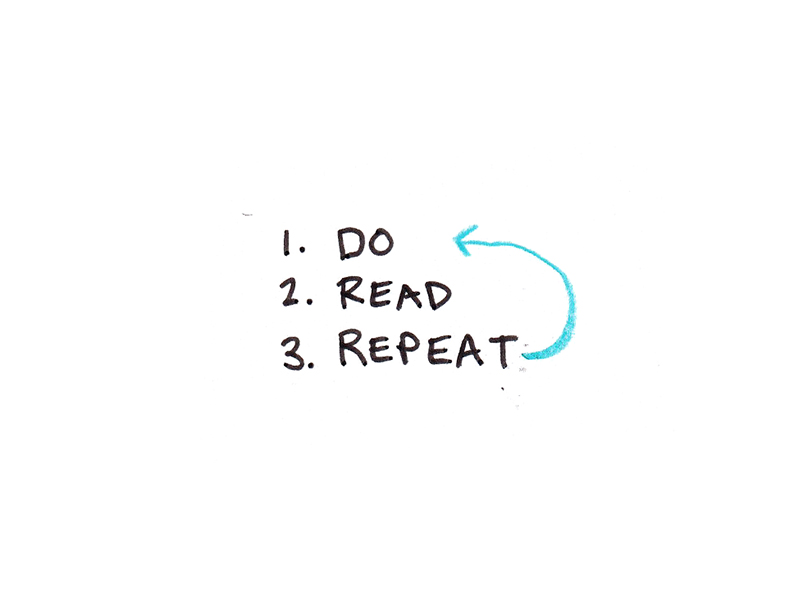
First, some notes on the connection between studying and taking motion:
1. No, studying books just isn’t one way or the other “dangerous” for self-improvement.
A harmful meme within the self-improvement house is that the everyday particular person spends an excessive amount of time “studying.” One way or the other, the specious argument goes, the common particular person is studying too many books, and that is what’s stopping motion.
That is ridiculous. The common particular person reads shockingly little, and now reads even much less than they used to.
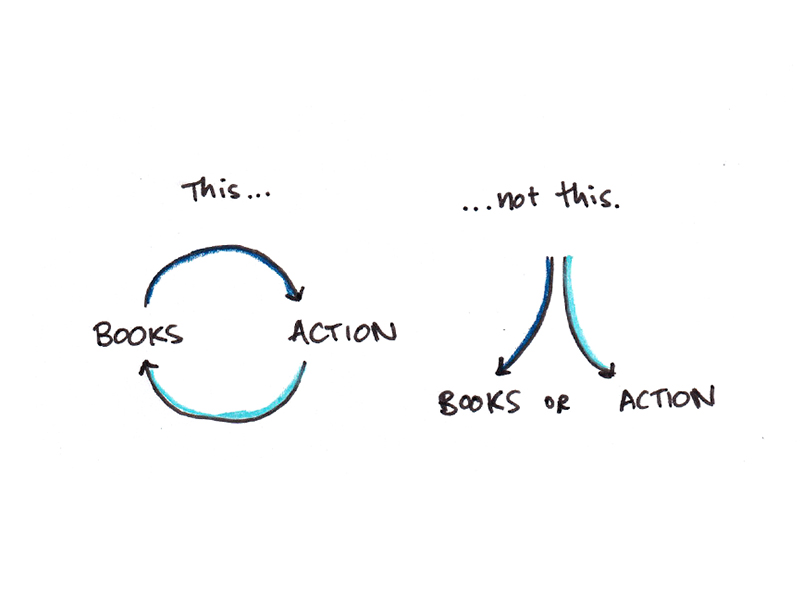
Carried out correctly, studying offers a strong basis for information in a site. That information ensures motion is pointed in the precise path.
2. Motion ought to happen alongside studying, not afterward.
Whereas studying is sweet, not dangerous, it might probably get in the best way should you require your self to “end” your studying earlier than you’re taking motion.
Generally, the one time studying needs to be accomplished earlier than taking any motion is in circumstances the place the motion is comparatively simple, however the price of a improper resolution is excessive. So shopping for a home, selecting whether or not to give up your job, or having youngsters are all decisions the place initiating the motion isn’t the issue—it’s making a clever resolution.
Nonetheless, for many areas of life, errors are typically reversible. Thus, it’s much better to start a mission with a nasty technique and modify it based mostly in your studying than to attend till you’ve formalized the “good” technique to take motion.1
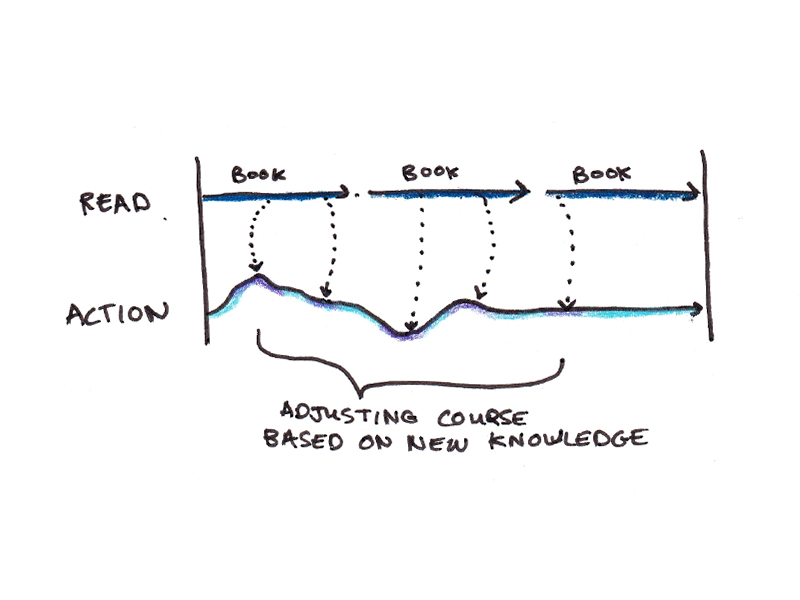
Studying with out motion is impotent. Motion with out studying is ignorant. You want each.
Making a One-Month Data Dash
The fundamental framework I’d prefer to counsel is the one I used for my Foundations mission: choose an outlined space of enchancment, and make a targeted effort at enhancing your information and conduct over one month.
Why one month?
Individuals are inclined to drastically overestimate their willingness to stay to lengthy tasks. Yr-long tasks sound cool, however few folks have the stamina to succeed in the tip of them.
A month, in distinction, is sufficient time to make substantial progress whereas being quick sufficient to keep away from some frequent pitfalls. Assuming you’re devoted, it’s best to be capable to learn one to 5 good books on a subject and domesticate new habits, programs or abilities.
If it seems one month is inadequate, you possibly can observe up your month-long dash with a second (or third, or fourth) one-month dash. The one-month dash imposes helpful design constraints, however not synthetic restrictions, for almost any mission you would possibly care about.
I break down the method of conducting a month-long dash into 4 components:
- Select a theme.
- Take motion.
- Get books.
- Alter based mostly on suggestions.
Step One: Select a Theme
First, it is advisable select a theme you’d prefer to work on. This could possibly be one thing private (resembling enhancing your well being, profession, relationships or hobbies), or it could possibly be associated to buying a talent or discipline of data (resembling French, historical past or utilizing AI in your job).
Scope issues too. If you happen to choose one thing too common, your studying shall be diffuse, and getting a strong reply as to the precise actions to take would require studying extra books. If you happen to choose one thing too particular, you danger permitting your preconceptions to distort the mission, and should find yourself specializing in one thing that’s not related to your broader objectives.
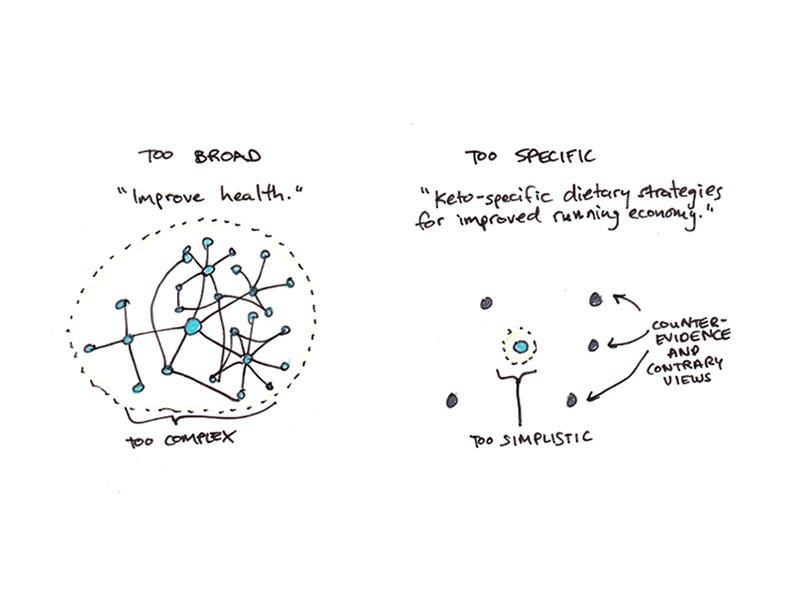
For instance: the theme “higher well being” could also be overly broad; there are various totally different related actions that might be tough to suit into one month. Alternatively, “apply keto-specific dietary methods to my working efficiency” might be too particular—it takes with no consideration the efficacy of the technique, and thus, makes it onerous so that you can be taught one thing that may change your thoughts. Right here, a greater mission is likely to be “enhancing well being by means of health.”
Step Two: Take Motion
I prefer to invert the conventional “learn first, do later” strategy that’s generally utilized in school-based studying. An action-first strategy is how we’ve realized to construction our programs, as college students often discover it more practical for many areas of self-improvement.
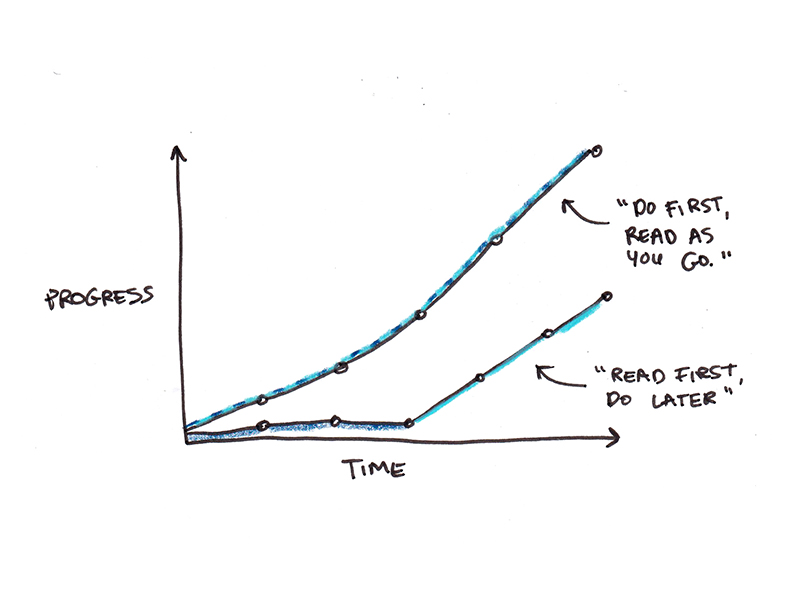
The reason being easy: just about nobody is a clean slate. You have already got some common concepts about how you’d go about enhancing inside a given theme. So get began. What you learn will then change your path somewhat than present the whole highway map.
That is clearest with areas the place you have already got sufficient information to get began. You most likely already know sufficient about consuming higher to enhance your eating regimen with out doing in depth analysis in vitamin. This doesn’t imply studying the vitamin books isn’t beneficial—a variety of what you imagine could also be improper!—but when the common particular person merely took actions they thought have been helpful, it could most likely nonetheless be a optimistic change.
What about areas the place nothing? Maybe you need to be taught a international language, programming or find out how to begin a enterprise, and also you don’t know something about it in any respect. In these circumstances, I counsel discovering a workbook or sensible information as your first guide and utilizing it as your start line—learn whereas doing the workouts.
Step Three: Get Books
After you’ve began doing one thing within the area you’d like to enhance, it’s a good suggestion to pair that naive motion with intensive research. This lets you pivot towards one thing higher if it seems your preliminary plan was misguided. Even when your strategy is principally strong, you need to use what you be taught to strengthen your dedication and fine-tune the main points.
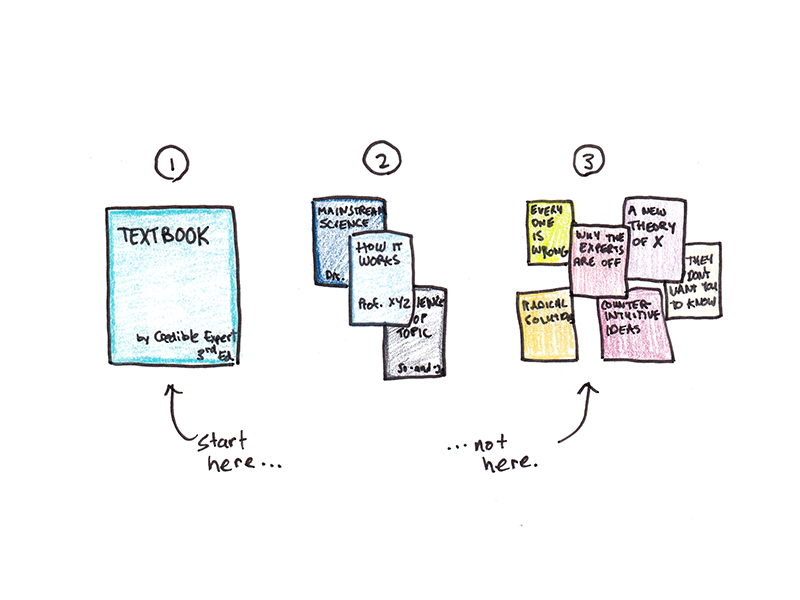
You must learn books on this order:
- Textbooks.
- Credible common books based mostly on skilled consensus (not polemics).
- Fascinating books that will not be consensus opinions.
1. Textbooks
Textbooks needs to be your first selection for understanding a site. I do know, I do know, no person likes this recommendation, however I’m going to repeat it in any case.
Textbooks have many nice properties. They’re geared toward learners (not like tutorial monographs or papers), so you possibly can often learn them even with minimal background information. They’re complete, giving a full image of a discipline. They often current the skilled consensus comparatively nicely, with much less bias than many common sources.
Textbooks are additionally costly. Get them from the library should you can, in any other case I typically depend on used copies of older editions which might typically be picked up cheaply. Particularly if the subject is huge, you possibly can often discover one or two which can be modestly priced on Amazon.
Textbooks take longer to learn than most books. That’s okay. If you happen to solely have time to learn one textbook within the month, you’ll nonetheless most likely find yourself forward.
The one exception to this rule is non-academic topics the place there isn’t a very good textbook. That is rarer than you’d suppose. In my current 12-month Foundations mission, as an example, Productiveness and Group have been two months the place the related tutorial analysis was too tangential to my objectives to be helpful, so I relied on self-help sources as an alternative. However in Health, Cash, Meals, Reflection, Connection and Sleep, I began with textbooks, and in the remaining I relied on tutorial books to floor my information.
2. Credible Books Outlining Professional Consensus
If textbooks are unavailable to your matter, otherwise you’ve already grabbed one and need to increase your studying listing, the following books you learn needs to be credible common books that summarize a consensus opinion.
This may be onerous to evaluate from the surface. Many books put on their defiance of skilled consensus on their sleeve, so it’s simple to inform they signify a non-mainstream viewpoint. However on condition that common readers typically need what’s “new” somewhat than what’s “recognized” (even when they’re blind to each), even mainstream books typically place themselves as heralds of a brand new mind-set.
Credentials and prestigious tutorial affiliations are purported to be barometers of skilled consensus, however I discover them pretty unreliable in observe. Many quacks have letters after their title, and loads of individuals who attended Harvard have decidedly non-mainstream views. Conversely, there are sensible, cautious writers who lack credentials.
For higher or worse the “model” of a guide is commonly a greater sign about its conformity to skilled consensus. If it’s written in a hyperbolic tone, has nigh-unbelievable findings, or wraps explanations for dissent round darkish conspiracies, that’s typically a nasty signal. (Though, there are exceptions to this too.)
One possibility for pre-vetting books I’ve not too long ago been counting on is asking ChatGPT for the principle arguments made in a guide, and whether or not these are largely aligned with a mainstream perspective. It’s imperfect, in fact, however this may be thought-about with different items of details about a guide (pedigree, model, third-party critiques) that make it much less seemingly you’ll go astray.
3. Fascinating Books
The aim of the primary two steps isn’t to restrict your self to the mainstream, tutorial consensus for all fields. Whereas I do imagine it’s best to simply belief the consultants for many issues, I do know lots of people who’re snug taking bolder bets with their information base.
As a substitute, the aim of studying textbooks and consensus-representing common books is to offer you a way of what consultants, as an entire, imagine on the subject. This needs to be your prior perception in any discipline, even should you later select to reject it.
In distinction, should you begin with attention-grabbing, heterodox thinkers, chances are you’ll find yourself down a rabbit gap of nonsense that’s tough to get well from.
I don’t say this to be a condescending, finger-wagging “misinformation” sort that appears to think about everybody else is gullible and wishes guardrails on their considering.2 As a substitute, I say this as somebody who has, repeatedly, unintentionally gone down these rabbit holes of nonsense, solely belatedly correcting my misconceptions after a lot onerous work (and embarrassment).
Fascinating books are, nicely, attention-grabbing. It’s tempting to learn them first. Nonetheless, if the attention-grabbing guide you occur to choose up is decidedly in opposition to what extra sober analysts suppose is true, chances are you’ll find yourself worse off than should you hadn’t learn something in any respect.3
Step 4: Alter Primarily based on Suggestions
The fourth step within the one-month information dash is to regulate what you’re doing in mild of what you’re studying within the books.
Typically, this ends in minor changes that don’t basically alter your plan.
After I did my analysis for Health, as an example, I used to be enamored with the thought of day by day train. I nonetheless suppose it’s a very good strategy for behavior constructing, but it surely was by means of doing analysis that I spotted day by day train can shortly turn out to be unsustainable should you go too onerous too quick. This lead me to change my strategy to include “placeholder” actions like a stroll or mild stretching that helped preserve the behavior in place, however gave me time to adapt to the brand new routine.
In different circumstances, studying extra a couple of matter makes you understand your earlier strategy was misguided.
When studying about wholesome consuming, as an example, my authentic plan was to briefly get rid of junk meals—phasing it again in after a month or so. I now suppose this strategy is unhelpful. Junk meals is difficult to outline. As a substitute, what actually issues is the general consuming sample—so optimistic objectives like making half of your plate vegatables and fruits, or half of the carbohydrates you eat coming from complete grains, are most likely extra helpful.
Equally, once I was doing analysis on sleep, it grew to become obvious that it was higher to set a set wind-down time for the night time somewhat than a set bedtime. Attempting to sleep earlier than you’ve constructed up sufficient sleep strain may be counterproductive, and insomnia is commonly an issue of making an attempt too onerous to sleep nicely (somewhat than making an attempt too little).
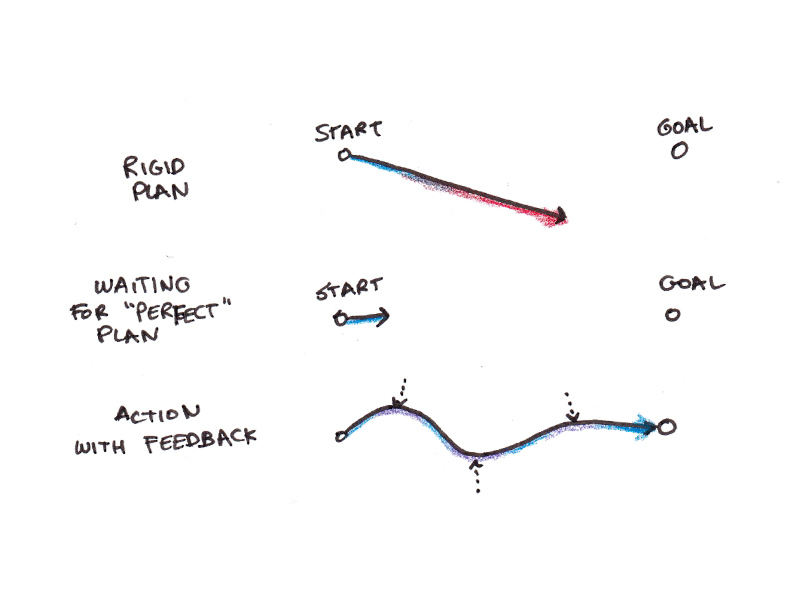
The correct angle to take throughout your one-month dash is one in every of experimentation and making an attempt issues out. It’s higher to suppose issues like “I’m wondering what would occur if I attempted…” somewhat than “I have to keep on with this.” Flexibility and a willingness to vary strategy halfway are hallmarks of a profitable dash, not a failure of self-discipline.
What Would You Prefer to Enhance?
What’s one thing you’ve all the time wished to be taught or enhance in your individual life? It could possibly be one thing associated to non-public or skilled improvement, a interest, sport or an space of curiosity. Within the feedback part beneath the submit, write out what your one-month information dash for this topic would seem like. Be sure you embrace the theme, what actions you’d take (to begin), and books you would possibly learn (or search for, should you’re unsure but).
Footnotes
- A significant motive for that is that studying lots provides you extra information, but it surely doesn’t all the time provide you with extra readability. Considerably paradoxically, studying extra a couple of matter improves the standard of your actions, although it doesn’t all the time really feel this manner. Whereas studying steers you away from some errors, it typically undermines your confidence in actions you naively assumed to be clearly good.
- The politicization of “misinformation” or “disinformation” is unlucky, as a result of the common particular person (myself included) believes fairly a couple of issues that simply ain’t so. Figuring out the reality is actually onerous, but it surely’s even tougher should you assume that falsehoods are simple to identify.
- There’s a robust path-dependency with studying. The place you begin strongly determines the place you find yourself, which is why realizing the place somebody went to highschool, the place they grew up, or their household’s faith (typically) can inform you what they imagine. Apostates are the exception, not the rule, and most of the people coached in a single aspect of an argument cease listening after they start to listen to the rebuttal.
[ad_2]