
[ad_1]
The “Shutter Pace Chart” is a instrument or cheat sheet designed to assist photographers perceive and use shutter velocity successfully for varied capturing eventualities. By understanding the patterns and ideas laid out on the chart, you’ll unlock new artistic avenues in your images journey.
Shutter Pace Chart Infographic
As we discover the world of images, we perceive the necessary function that Shutter Pace performs in reaching correct publicity. It’s one of many important components of the Publicity Triangle, alongside Aperture and ISO. Collectively, these parts set up the premise for a well-exposed {photograph}.
In my opinion, understanding and mastering Shutter Pace to supply well-exposed photos is an easy a part of this photographic method. For me, the intriguing facet, nonetheless, is the potential for the artistic software of Shutter Pace in our images.
By adjusting Shutter Pace values, photographers can uncover a number of artistic potentialities. These delicate shifts enable us to produce attention-grabbing inventive results, comparable to these seen in lengthy publicity images, which stretches actuality’s limits.
This brings us to a different invaluable instrument: the Shutter Pace Chart. As a useful cheat sheet infographic, it serves as a visible information that enhances your understanding of Shutter Pace particulars and nuances.
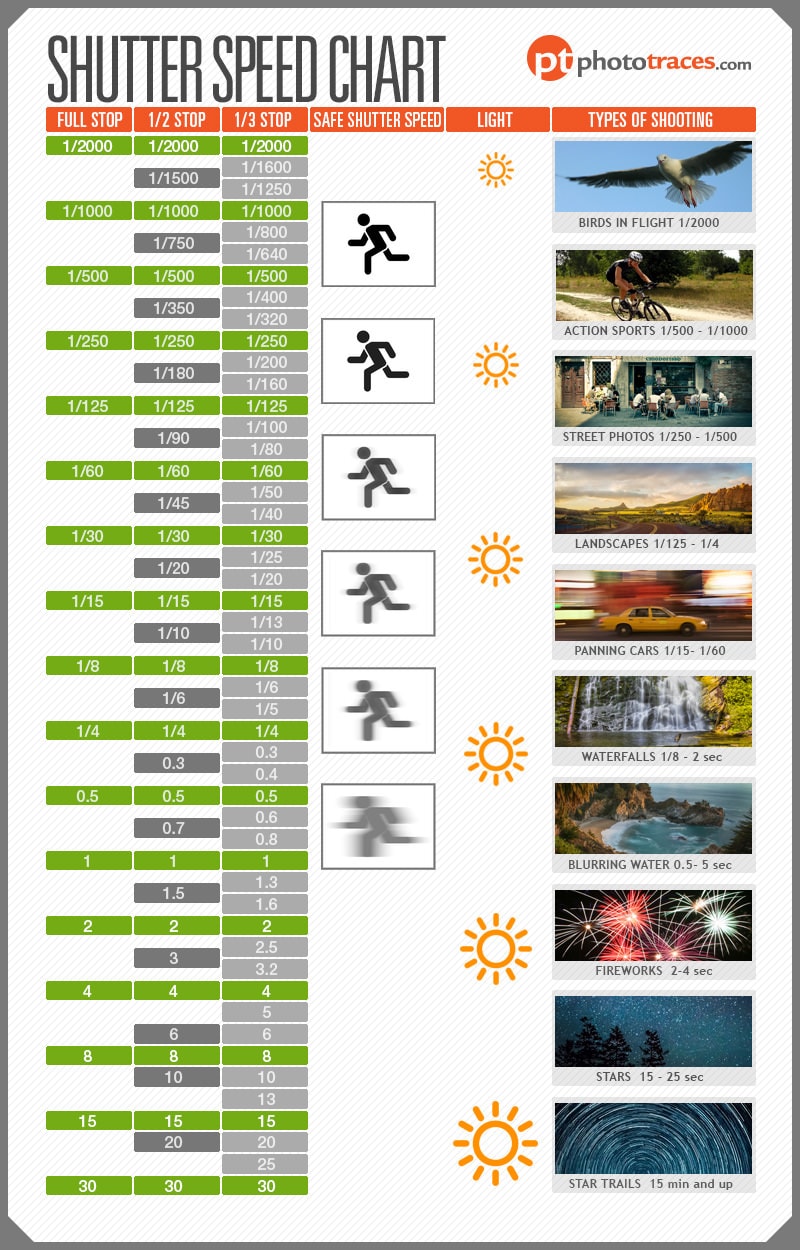
When utilizing the Shutter Pace Chart, you’ll start to understand how Shutter Pace exerts its affect in your images. Its utility extends past reaching the specified publicity; it transforms right into a dynamic instrument for controlling movement inside your photos. With the Shutter Pace Chart at your disposal, you may totally discover the varied facets of Shutter Pace.
Let’s break down the primary parts of the Shutter Pace Chart.
Full Cease, 1/2 Cease, 1/3 Cease
Shutter Pace, along side Aperture and ISO, is an important controller of publicity. For a considerable interval, understanding its software was comparatively easy and direct:

Doubling or halving the Shutter Pace alters the publicity worth by an element of two or 1-stop.
As an illustration, adjusting the shutter velocity from 1/200s to 1/100s doubles the quantity of sunshine reaching the movie or sensor (1 cease). Basically, if you happen to maintain the shutter open twice as lengthy, you obtain twice the quantity of sunshine. Alternatively, if you happen to shift the shutter velocity from 1/200s to 1/400s, you lower the publicity by an element of two.
The appearance of digital cameras launched extra flexibility. We’re now not restricted to adjusting the shutter velocity by one cease alone. Some cameras allow us to alter the shutter velocity by a half-stop (1/2 cease) and others by a third-stop (1/3 cease).
A half-stop (1/2) change in shutter velocity alters publicity by 50%, whereas a one-third-stop (1/3) adjustment adjustments publicity by roughly 33%.
The shutter velocity chart stays a useful instrument for estimating and calculating publicity extra effectively.
Save Shutter Pace
The time period “Secure Shutter Pace” usually refers back to the minimal shutter velocity required to shoot a pointy, blur-free picture when utilizing a digital camera handheld, with out a tripod. This velocity is deemed protected because it prevents the movement blur that may end result from digital camera shake when shutter velocity is inadequate.
A number of components can affect the precise protected shutter velocity, comparable to lens focal size, the photographer’s steadiness, and the topic’s motion. Usually, a broadly accepted apply is to make use of a shutter velocity a minimum of double the reciprocal of the lens’s focal size. As an illustration, utilizing a 50mm lens would possibly require a protected shutter velocity of 1/100s or sooner to stop digital camera shake and keep picture sharpness.
Capturing transferring objects in your body calls for explicit consideration to shutter velocity, important for reaching sharp images. The visible assist of a Secure Shutter Pace chart reveals that utilizing a shutter velocity slower than 1/100s would possibly push us right into a doubtlessly dangerous zone relating to our sharp picture goal.
Mild (Publicity)

This can be a easy illustration of the correlation between shutter velocity values and the quantity the sunshine that reaches the digital camera sensor. It’s a basic idea that may considerably affect the publicity degree in your images.
Within the context of publicity, shutter velocity is a important issue. The connection is simple: sooner shutter speeds, indicated by a bigger denominator (e.g., 1/1000 seconds), enable solely a short second for mild to enter the sensor, leading to much less mild (decrease publicity) being captured.
Conversely, slower shutter speeds, represented by a smaller denominator (e.g., 1/30 seconds), prolong the period of publicity, permitting extra mild to be collected by the sensor.
The mastery of this relationship between shutter velocity and lightweight is the essence of publicity management in images.
Shutter Pace Chart and Forms of Capturing
That is what I name a Shutter Pace Chart Cheat Sheet that helps photographers use a shutter velocity as a artistic instrument.
You employ the quick shutter velocity when you must freeze fast-moving topics or keep readability in well-lit situations.
Slower Shutter Pace is beneficial in eventualities the place you want to convey movement, create mesmerizing long-exposure results, or seize well-exposed photos in low-light settings.
Birds in Flight 1/2000s
When wildlife photographers observe and {photograph} a fowl in flight it requires an excessive shutter velocity of 1/2000s to get the fowl completely sharp. The variation of this system is to cut back the shutter velocity to 1/400s will lead to a pointy physique of the fowl however blurry wings. This can be a extra artistic strategy to wildlife images.
Motion Sports activities 1/500s – 1/1000s

You most likely don’t want a quick shutter velocity when photographing a golfer placing on the inexperienced however any sports activities that contain quick actions and actions will want particular consideration to shutter velocity worth. Photographing skilled soccer recreation or your children taking part in soccer would require shutter velocity between 1/500s and 1/1000 to freeze the motion and to get sharp images.
Avenue Images 1/250s – 1/500s

On the whole, when photographing the streets the scene is in fixed motion. You may have folks strolling in the direction of you or crossing the road, automobiles transferring and stopping, the right shutter velocity is paramount not just for getting the precise publicity but in addition for avoiding blurry or tender photos.
Landscapes 1/125s -1/4s

It’s arduous to pinpoint the shutter velocity vary for the landscapes as a result of the methods and the setting you employ will fluctuate relying on if you happen to shoot hand-held or on a tripod. The slower shutter velocity of 1/8 or 1/4 is completely acceptable when utilizing a tripod however if you happen to shoot hand-held you must cut back the worth to get sharp images.
Panning Vehicles 1/15s – 1/60s

The panning is among the most attention-grabbing artistic method that entails the shutter velocity. Through the use of an extended shutter velocity (1/15 -1/60) and monitoring the transferring object (automobile) when the shutter is open allow us to create the impact when the essential object is in focus and the setting round it’s blurred.
Waterfalls or Quick Operating Water 1/8 – 2sec
Right here we’re coming into a extra artistic strategy to images on the whole and shutter velocity particularly. By photographing a quick working water with the longer shutter velocity permits us to create the visible impact which doesn’t exist in actual life. It’s like making a particular impact in motion pictures. You open up the shutter velocity for an extended time frame and let transferring water to create movement blur impact.
Blurring Water 0.5 – 5 sec
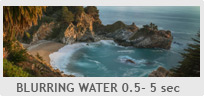
Blurring the water is the muse of panorama images. Nothing makes the landscapes and seascapes dreamy and fascination like lengthy publicity impact within the water. When photographing ocean, sea, lakes, and rivers the place motion within the water just isn’t too quick or while you shoot from a larger distance, you want a slower shutter velocity worth in comparison with capturing the waterfalls to get this silky and clean impact within the water.
Fireworks 2-4 sec
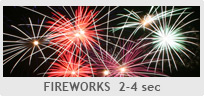
It isn’t simple to {photograph} fireworks. You’re capturing at night time with vibrant lights popping up randomly all over the place. The logic right here is to open the shutter velocity lengthy sufficient to seize all the lifespan of the shoot. You employ a sooner shutter velocity and you’re going to get a tiny unimpressive mild within the vastness of the darkish sky and if you happen to use too lengthy worth you’ll obtain the overexposed, blurry, and unnatural impact. I discover that the velocity of 3-4sec works the perfect.
Stars (Astrophotography) 15-25 sec

Capturing the celebrities or astrophotography permits us to seize one thing that’s not seen by the bare eye. Opening the shutter velocity for a protracted time frame helps us to amplify the dim lights of the celebrities.
Right here you must strike the precise steadiness. In case you use a quick shutter velocity the celebrities shall be tiny and dim however if you happen to use a velocity longer than 30sec you get a strat path impact created by the fixed motion of the earth. So the shutter worth between 15 and 25 sec will produce sharp and vibrant stars.
Star Trails 15 min and up

This system allows us to benefit from the steadily spinning earth round its axis. In case you open the shutter velocity lengthy sufficient you may seize the trailing impact of the celebrities. The normal method requires a shutter velocity worth of quarter-hour or longer. However with the digital workflow you may simulate the identical trailing impact by taking a sequence of images, let’s say 120 of them, with 30-second publicity and mixing them in Photoshop or one other modifying program. It is possible for you to to create the impact of 60 minutes of publicity.
Shutter Pace Fundamentals
Shutter velocity is a part of the publicity triangle together with aperture and ISO. Shutter velocity doesn’t solely management the publicity but in addition lets the artistic photographer to innovate and experiment with the movement. When understood to the core, shutter velocity just isn’t a technical however a artistic instrument.
The Shutter as an Important A part of the Digital camera
The shutter is the a part of the digital camera that continues to be closed to stop mild from coming into and reaching (exposing) the sensor. When the shutter button is pressed, the shutter curtain opens to let mild attain the sensor. The sensor information the depth of sunshine whereas the shutter is open; that is how the picture will get captured.
Definition of Shutter Pace
Shutter velocity is outlined because the time period between the opening and shutting of the digital camera shutter. It’s the time that the sensor or movie information the sunshine and, therefore, creates {a photograph}.
How Shutter Pace is Measured
Most often, shutter velocity is measured in fractions of seconds. Nonetheless, some lengthy publicity photos require a shutter velocity of as much as 30 seconds or longer.
Shutter velocity is often measured as follows:
1/2000s, 1/1000s, 1/500s, 1/250s, 1/125s, 1/60s, 1/30s, and so forth.
Every cease down the road (from 1/60s to 1/30s, for instance) will increase the period of time the shutter stays open by an element of two and, in consequence, doubles the quantity of sunshine that reaches the digital camera sensor.
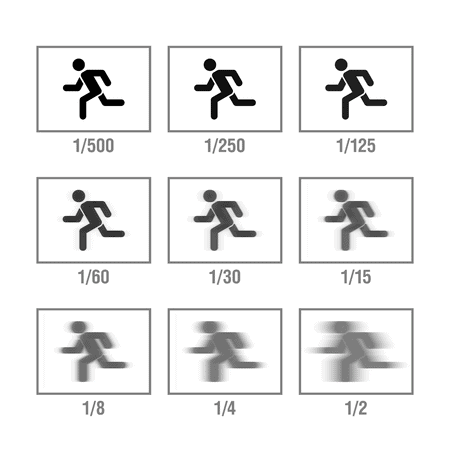
The Shake Blur
Typically occasions, shake blur occurs as a result of shake or motion within the digital camera whereas the shutter continues to be open. It may be averted through the use of a tripod with a distant shutter launch/timer or the minimal shutter velocity rule. In case you ever puzzled why your images seem blurry or tender, it’s due to these slight actions whereas the shutter was open.
The Minimal Shutter Pace Rule for Shake-Free Pictures
When not utilizing a tripod or one other sort of help, images are likely to have ‘shake blur’ if the shutter velocity falls under a specific quantity. This has been calculated and is given as:
1/focal size or 1/100, whichever is quicker
Due to this fact, in case you are utilizing a full-frame digital camera with an 85mm lens, the minimal shutter velocity you must maintain is 1/100 (as a result of 1/100 is quicker than 1/85). Nonetheless, in case you are utilizing the identical digital camera with a 300mm lens, the minimal shutter velocity is 1/300s.
On a crop body sensor, multiply it with the crop issue. For instance, an APS-C sensor digital camera with the identical 85mm requires that you just use a minimal shutter velocity of 1/(85 x 1.5) = 1/127.5. Right here, you’ll use 1/150 and never 1/125 to keep away from any likelihood of shake.
In case your lens has a picture stabilization function, you may cut back it by that many stops from the minimal shutter velocity. For instance, if it’s a must to use a minimal shutter velocity of 1/125, however your lens has a 1 cease IS, you should utilize a shutter velocity of 1/60.

Freeze the Second or Sooner Shutter Speeds
Sooner shutter speeds are likely to freeze the second, which is often used for wildlife images and water splash images amongst many others. A fowl in flight could require you to shoot at 1/2000s or sooner. Freezing the movement of water could require you to shoot at 1/1000s or sooner relying on the stream of water. This system can also be utilized in motion photographs.
For instance, freezing the movement throughout racing occasions can produce tack sharp footage with tiny bits of grime frozen mid-air as they splatter throughout the tires.
Artistic Movement Blur or Slower Shutter Speeds
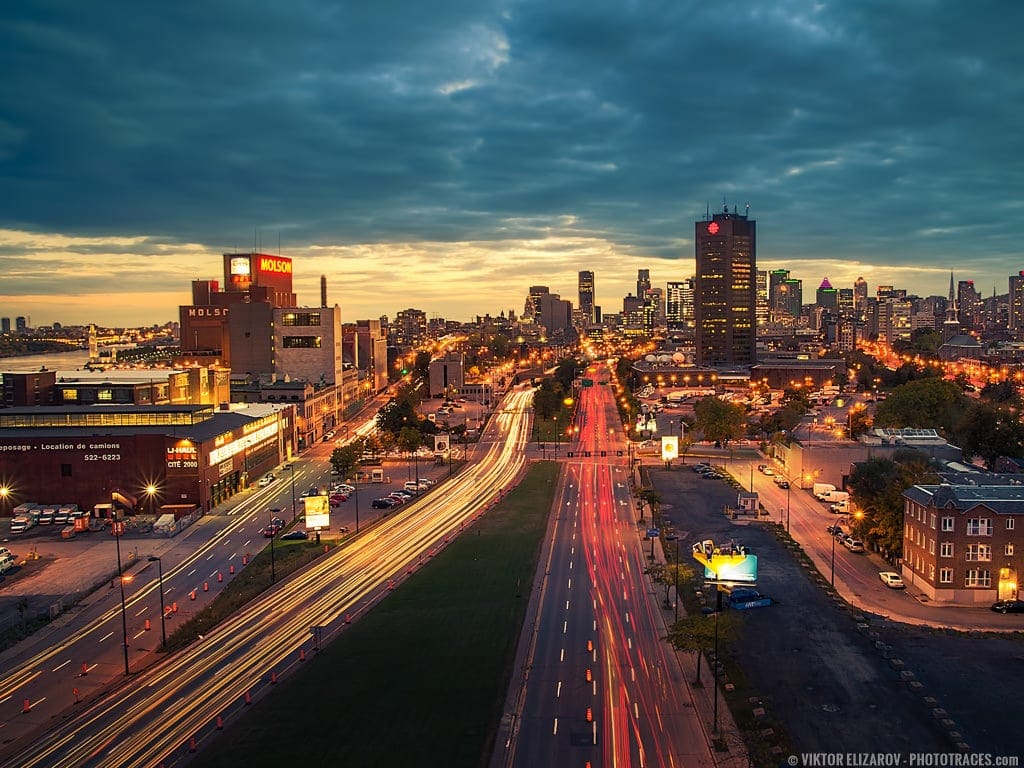
Slower shutter speeds have a tendency to supply movement blur. That is achieved by conserving a serious a part of the topic, or a minimum of some a part of topic, nonetheless whereas the transferring elements are naturally blurred in movement. This method is widespread in capturing mild trails and artistic dance actions. Star path images is predicated on the movement blur of the celebrities and their motion.
Capturing landscapes that function water additionally entails blurring the movement to make the water seem silky clean. Many photographers do that when capturing waterfalls to mimic the type utilized in work.
When utilizing prolonged publicity occasions, that is generally often known as lengthy publicity images. Star trails, nightscapes, and Milky Means images are grouped on this class. Sometimes, the shutter velocity may be very gradual, which makes it unimaginable to shoot with out a sturdy help like a tripod.

Setting the Shutter Pace – Two Main Modes
Shutter precedence mode allows you to set the shutter velocity whereas the digital camera routinely units the aperture based mostly on the sunshine situations, metering mode, publicity compensation, and locked-in ISO settings. In handbook mode, all of the settings are fully handbook together with the shutter velocity and aperture; metering solely gives a tenet for the proper publicity.
The place Can You Discover the Shutter Pace?
The shutter velocity might be discovered on the underside left of the viewfinder display or on the highest of the digital camera’s LCD panel (not all cameras have this function). Additionally, you could find the settings displayed on the digital camera’s rear LCD display. Shutter velocity is often denoted as a quantity as a substitute of fractions. For instance, 1/125 is denoted as 125, and 1 second is denoted as 1. Nonetheless, this conference has modified in a couple of latest digital camera fashions.
Shutter Pace Chart | Remaining Ideas
The Shutter Pace Chart is the important thing to understanding how shutter velocity brings life into your photos. It controls picture stream, enabling you to freeze the motion, produce a artistic blur, and even stack star trails, primarily performing because the gasoline that propels your creativity. Crucially, timing your shutter button press appropriately in coordination with the suitable digital camera settings can lead to gorgeous pictures.
The Shutter Pace Chart is your information to completely harnessing the facility of shutter velocity, reinforcing your capacity to create outstanding, well-composed photographs that really encapsulate your imaginative and prescient.
Articles Associated to “Shutter Pace Chart – Cheat Sheet for Controlling Movement in Images“
[ad_2]